Density vs. Viscosity: Why Does Honey Pour Slower? Answered
Ever stood in your kitchen, patiently waiting for a sticky stream of honey to ooze from a jar, only to watch water gush effortlessly from a tap moments later? It’s a common observation, but have you ever wondered why some liquids pour at vastly different speeds? Many of us instinctively link “thickness” with “heaviness,” often confusing two fundamental properties of matter: density and viscosity. Both are crucial concepts in Fluid Dynamics, yet they govern entirely different aspects of a liquid’s behavior.
Get ready to unravel this everyday mystery! In this post, we’re going to demystify density and viscosity using simple, everyday examples you already know. Our main characters in this fascinating scientific story? The ever-familiar Honey, the versatile Oil, and the ubiquitous Water. By the end, you’ll not only understand the science behind every pour but also be able to impress your friends with your newfound expertise!
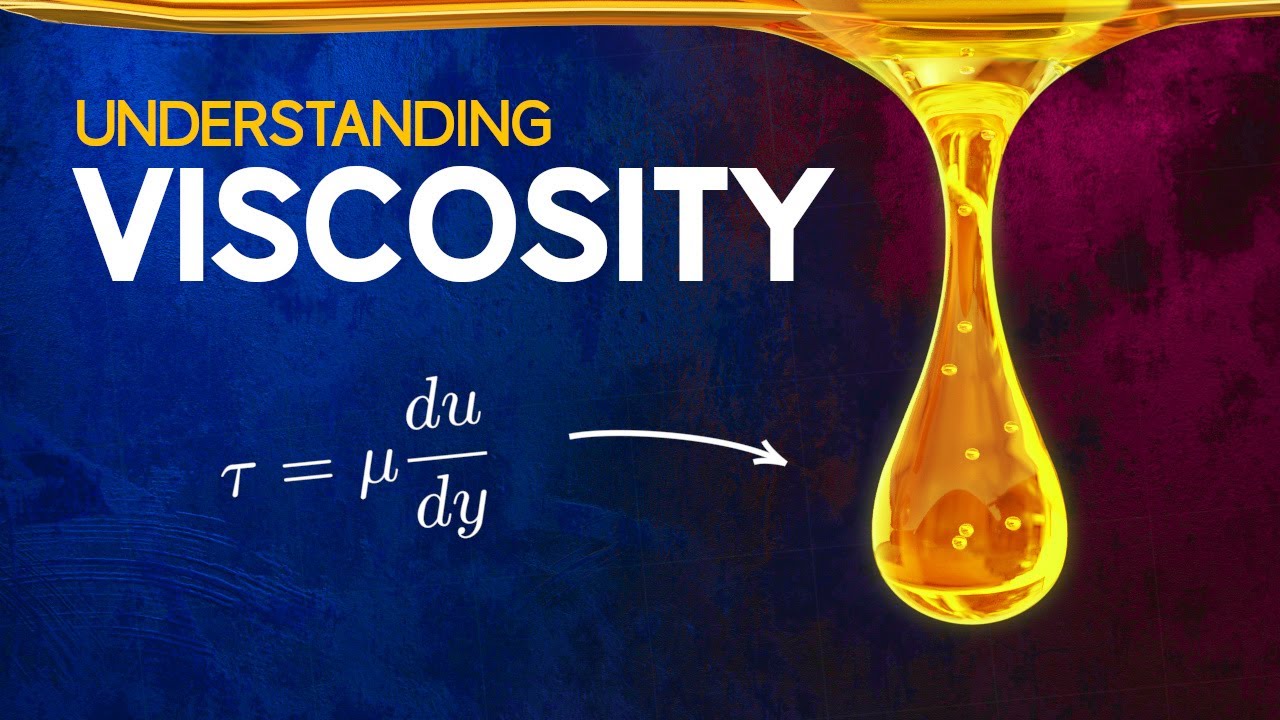
Image taken from the YouTube channel The Efficient Engineer , from the video titled Understanding Viscosity .
Every day, we interact with liquids, from the morning coffee to the evening shower, often taking their unique behaviors for granted.
Decoding the Drip and the Dash: Your Everyday Guide to Liquid Dynamics
Imagine pouring a dollop of golden honey from a jar. It moves with a slow, almost reluctant grace, forming a thick, drawn-out stream. Now, picture tipping a glass of water. It rushes out instantly, a quick, splashy gush that’s gone in a flash. Why do these two common liquids behave so differently when poured? This simple, everyday observation holds the key to understanding some fundamental properties of all liquids.
Unpacking the Confusion: Density vs. Viscosity
Many people intuitively understand that honey is "thicker" than water, and that water feels "lighter" than the same volume of honey. It’s common to lump these observations together, often leading to a mix-up between two distinct, yet equally important, characteristics of liquids: density and viscosity. Is honey slow because it’s heavy, or because it’s thick? And are those two things even related? This common confusion is precisely what we aim to clear up.
Our Journey’s Purpose
This blog post is designed to be your friendly guide through the intriguing world of liquid behavior. We’re going to demystify complex concepts from Fluid Dynamics, making them accessible and understandable through simple, everyday examples you already encounter. Forget the intimidating formulas and jargon; we’ll focus on the practical, observable differences that govern how liquids move and interact.
Meet Our Liquid Protagonists
To illustrate these concepts clearly, we’ll be focusing on three familiar liquids throughout our exploration. These "main characters" will help us truly grasp the nuances of density and viscosity:
- Honey: Known for its delightful sweetness and notorious slow flow.
- Oil: A versatile liquid, often feeling "slippery" and flowing differently from water.
- Water: The most common liquid, serving as our baseline for comparison.
First, let’s tackle the very first secret about liquids, starting with what makes some feel "heavy" and others "light."
As we begin to peel back the layers of mystery surrounding how liquids pour, let’s first debunk a common misconception that often confuses ‘heaviness’ with ‘thickness’.
The Weight of What’s Within: Unpacking Density’s True Tale
When you pick up a bottle of syrup and then a bottle of water, your immediate thought might be that the syrup feels "heavier" because it’s "thicker." While syrup is indeed denser than water, this intuitive link between "thickness" and "heaviness" can be misleading when we talk about how liquids behave. The truth lies in a fundamental property called density, and it’s all about how much matter is truly packed into a given space.
Density Defined: It’s All About the ‘Stuff’
At its core, density is a measure of mass per unit volume. Think of it as how tightly packed the matter (atoms and molecules) is within a specific amount of space. This relationship is neatly summarized by the formula:
Density (D) = Mass (M) / Volume (V)
It’s not about how ‘thick’ or ‘viscous’ a substance feels in your hand; it’s purely about the amount of ‘stuff’ crammed into a particular container size.
The Classic Analogy: Feathers vs. Lead
To truly grasp this concept, consider a classic example: a one-pound box of feathers versus a one-pound lead weight. Intuitively, the lead weight feels much "heavier" than the box of feathers. However, they share the exact same mass – one pound. The profound difference lies in their volume. To achieve a mass of one pound, feathers require a significantly larger box (much more volume) because they are loosely packed with a lot of air in between. A one-pound lead weight, on the other hand, is tiny in comparison because lead’s particles are incredibly tightly packed. This stark contrast in volumes, for the same mass, results in vastly different densities. Lead is incredibly dense; feathers are not.
Density in Liquids: Why Oil Floats on Water
Applying this principle to liquids helps us understand fascinating phenomena like why certain liquids float on others. Take oil and water, for instance. You might instinctively think that if oil feels ‘thinner’ than water (which isn’t entirely accurate, it’s less viscous), it might also be ‘lighter’ or less dense. And you’d be right on the density front!
When you pour oil into water, the oil consistently settles on top. This isn’t because oil is "less thick"; it’s because oil is less dense than water. Each unit of volume of oil contains less mass than an equivalent unit of volume of water. The water, being denser, sinks below the oil, effectively supporting the lighter, less-dense oil layer above it. This perfectly illustrates that a liquid’s density determines its ‘heaviness’ in relation to others, and thus whether it will sink or float.
The Core Function of Density: Sink or Float
Ultimately, the most crucial function of density in the context of pouring liquids is its role in determining whether a substance will sink or float in another. If a liquid is less dense than the liquid it’s poured into, it will float. If it’s more dense, it will sink. This principle is fundamental to understanding liquid layers and mixtures.
To illustrate this, let’s look at the approximate densities of some common liquids:
| Liquid | Approximate Density (g/cm³) | Notes |
|---|---|---|
| Water | 1.00 | The reference point; oil floats on it. |
| Olive Oil | 0.92 | Less dense than water, so it floats. |
| Honey | 1.42 | More dense than water, so it sinks. |
As you can see from the table, olive oil’s density is less than water’s, causing it to float. Conversely, honey’s density is greater than water’s, which is why it readily sinks when added to water. This property is entirely distinct from how quickly a liquid pours.
While density clearly dictates whether a liquid will sink or float, it’s an entirely different characteristic that truly governs how quickly it flows from a bottle.
While understanding ‘how much stuff’ is crucial, knowing a liquid’s density doesn’t tell the whole story of its movement.
Fluid Friction: The Secret Force Behind Slow Pours
Beyond how much stuff a liquid contains, there’s a powerful, often unseen, force at play that dictates its speed: viscosity. Imagine it as a liquid’s internal resistance to flow—a kind of ‘fluid friction’ that makes some liquids move sluggishly and others flow freely. It’s the reason honey oozes and water splashes.
Understanding Fluid Resistance: The Concept of Viscosity
At its core, viscosity measures a liquid’s reluctance to deform or flow when subjected to a force. Think of it as how "thick" or "sticky" a liquid feels, but not in terms of its actual density or weight. Instead, it’s about the internal stickiness between its molecules. The higher the viscosity, the greater this internal friction, and the more effort is required to make the liquid move.
The Science of Flow: Rheology and Shear Stress
This fascinating property is a key concept in Rheology, the scientific study of the flow of matter. Rheology examines how liquids (and even some solids) respond to forces, particularly shear stress. Shear stress occurs when a force causes one part of a fluid to slide past another. For instance, when you tilt a bottle of syrup, the layers of syrup slide past each other, and the resistance to this sliding is its viscosity in action.
Viscosity in Action: The Everyday Experience
To truly grasp viscosity, picture this:
- Wading through water: If you tried to walk through a swimming pool filled with water, it would be relatively easy. Water has a low viscosity, offering minimal resistance.
- Wading through honey: Now, imagine that same pool filled with honey. Wading through it would be an incredibly difficult, slow-motion struggle. Honey has a very high viscosity, creating immense internal resistance.
This difference is precisely why some liquids pour quickly and others, well, don’t. High viscosity (like honey) leads to a very slow flow rate, as the internal friction actively resists movement. Low viscosity (like water), on the other hand, allows for rapid flow because there’s little internal resistance to overcome.
When Viscosity Stays Constant: The Newtonian Ideal
It’s worth noting that some liquids, like water, are considered Newtonian fluids. For these fluids, their viscosity remains constant regardless of the amount of force (or shear stress) applied to them. Whether you gently stir water or vigorously splash it, its internal resistance to flow doesn’t change. Other liquids, known as non-Newtonian fluids, behave differently, but that’s a story for another time.
Now that we understand the true power behind a slow pour, let’s put our knowledge to the test by directly comparing some common liquids.
Now that we’ve uncovered viscosity as a key factor in how quickly liquids flow, let’s put this knowledge to the test by examining three common liquids in a direct comparison.
The Liquid Line-Up: A Viscosity and Density Face-Off
To truly grasp the dynamics of liquid flow, it’s incredibly insightful to compare substances we encounter daily. By observing how water, oil, and honey behave, we can concretely see the principles of density and viscosity at play, providing a clearer picture of why some liquids pour effortlessly while others seem to crawl. This direct showdown will highlight how these fundamental properties dictate the "speed" of a liquid.
Water: The Benchmark of Flow
Often taken for granted, water serves as our ideal benchmark for understanding liquid properties. It’s the standard against which we measure others, primarily because of its very accessible characteristics. Water has a relatively low viscosity, meaning its internal friction is minimal, allowing its molecules to slide past each other with ease. This characteristic, combined with its well-known density of approximately 1 gram per cubic centimeter (1 g/cm³), makes water incredibly easy to pour. It flows swiftly and smoothly, filling containers rapidly without much resistance.
Oil: The Viscous Floater
Next in our liquid lineup is oil, a substance that immediately presents a noticeable difference in flow compared to water. When you pour oil, particularly cooking oil, you’ll observe a distinctly slower and smoother flow. This is a direct consequence of its higher viscosity when contrasted with water. Oil molecules have stronger intermolecular forces, creating more internal resistance to flow. Interestingly, while it is more viscous, oil is also less dense than water. This is why oil consistently floats on top of water, forming distinct layers rather than mixing, a clear demonstration of its lower specific gravity.
Honey: The Champion of High Viscosity
Finally, we arrive at honey, the undisputed champion of high viscosity among our selected trio. The experience of pouring honey is a testament to extreme internal friction; it stretches, pulls, and flows at an agonizingly slow pace, often forming a thick, lingering stream. This sluggish movement is due to its extraordinarily high viscosity, far surpassing that of both water and oil. Despite its slow flow, honey is denser than water. If you were to carefully place honey into water, it would sink to the bottom, illustrating its higher mass per unit volume. This combination of high density and exceptionally high viscosity makes honey a fascinating study in fluid dynamics.
To summarize these comparisons and truly visualize their differences, let’s compile their key properties:
| Liquids | Relative Density | Relative Viscosity | Observed Pouring Speed |
|---|---|---|---|
| Water | Standard (1 g/cm³) | Low | Easy, Fast |
| Oil | Lower than water (floats) | Higher than water (Medium) | Noticeably Slower, Smooth |
| Honey | Higher than water (sinks) | Extremely High | Very Slow, Thick |
This direct comparison reveals that both density and viscosity play crucial roles in how a liquid behaves, influencing everything from how it layers with other liquids to its pouring speed. While the inherent properties of these liquids dictate much of their behavior, there’s another powerful factor that can drastically alter their flow, a secret we’ll explore next.
While the inherent nature of a liquid, like the difference between honey, oil, and water, dictates much about its flow, another powerful, external force is constantly at play: temperature.
The Warm Embrace: How Temperature Unleashes Liquid Flow
Think about pouring a thick syrup on a cold morning versus a warm afternoon. You’ll notice a dramatic difference, and that’s no coincidence. For most common liquids, there’s a fascinating and inverse relationship between their temperature and their viscosity – that is, their resistance to flow. Simply put, as you increase the temperature of a liquid, its viscosity typically decreases, making it flow more freely.
Everyday Demonstrations: From Breakfast to Your Car Engine
This principle isn’t just theoretical; it’s something you experience daily.
- The Honey Dilemma: Picture cold honey straight from the refrigerator. It’s so thick and sluggish, it’s almost impossible to get out of the jar. It might take ages to drip, or you might need to scoop it out. Now, gently warm that same jar of honey – perhaps by placing it in a bowl of warm water for a few minutes. You’ll observe a remarkable transformation: the honey becomes much more fluid, pouring easily and smoothly.
- Motor Oil in Action: The same concept is crucial for your car’s engine. When the engine is cold, the motor oil is thicker and doesn’t circulate as efficiently. As the engine warms up, the oil’s temperature rises, significantly lowering its viscosity. This allows it to flow more freely through the engine, lubricating all the moving parts effectively and protecting them from wear and tear.
The Molecular Dance: Why Heat Matters
To understand why temperature has such a profound effect on viscosity, we need to look at the liquid’s tiny building blocks: its molecules.
- More Energy, More Movement: When you increase the temperature of a liquid, you’re essentially giving its molecules more kinetic energy. This means they start to move around more rapidly and vigorously.
- Overcoming Forces: In their cooler, slower state, molecules in a liquid are held together by various intermolecular forces. These forces create internal friction, making it harder for molecules to slide past each other, which is what we perceive as high viscosity.
- Easier Sliding: With increased kinetic energy from higher temperatures, the molecules can more easily overcome these attractive intermolecular forces. They can push past each other with less resistance, allowing the liquid to flow much more easily. It’s like a crowded room where people are sluggishly trying to move past each other versus a room where everyone suddenly has more energy and can weave through the crowd with less effort.
A Note on Density
While temperature dramatically impacts a liquid’s viscosity, it’s worth noting that its effect on the liquid’s density is much less pronounced for common liquids like honey, oil, and water. A liquid might expand slightly and become slightly less dense when heated, but this change is usually far less significant than the drastic change in its ability to flow.
Ultimately, while temperature plays a powerful role in how freely a liquid flows, the true secret to its unique behavior often lies even deeper: within its very molecular structure.
While temperature certainly plays a crucial role in a liquid’s ability to flow, it’s only half the story; to truly understand why some liquids are inherently thick and others remarkably thin, we must peer into their very essence.
Unveiling the True Master of Flow: It All Comes Down to Molecular Structure
Think about the simple act of pouring. Whether it’s thick syrup slowly oozing or water splashing rapidly, what you observe on a grand scale—the macroscopic world—is fundamentally dictated by what’s happening at the incredibly tiny, invisible level—the microscopic world of molecules.
The Fundamental Blueprint of Viscosity
Viscosity, that resistance to flow we’ve been exploring, isn’t just a random characteristic; it is a direct consequence of a liquid’s molecular structure. Imagine trying to move through a crowded room versus an empty one. The "crowdedness" and the way people interact (or "tangle") with each other directly relate to how easily you can pass through. In liquids, this "crowdedness" and "tangling" are determined by:
- The size and shape of the molecules: Are they small and simple, or large and complex?
- How they interact with each other: Do they stick together strongly (strong intermolecular forces) or slide past easily (weak intermolecular forces)?
These two factors are the true architects of a liquid’s flow behavior.
Honey vs. Water: A Molecular Showdown
Let’s bring our familiar examples back into the spotlight to see molecular structure in action:
Honey’s Complex Tango
Honey’s characteristic thick, slow pour is a masterclass in molecular entanglement. It’s not just sugar; it’s primarily composed of two sugar molecules: fructose and glucose. These aren’t simple, isolated units. Instead, they form long, complex chains that are packed densely together.
- Long and Tangled: Imagine trying to pull a handful of long, wet spaghetti noodles apart. They cling and tangle. Honey’s sugar molecules behave similarly, getting interwoven and snagged on each other as the liquid attempts to flow.
- Significant Internal Friction: This molecular "tangle" creates substantial internal friction. To get the honey to move, these intertwined molecules must constantly pull apart from each other, which requires a lot of energy and force, leading to its high viscosity.
Water’s Effortless Dance
Now consider water, the quintessential low-viscosity liquid. Its secret lies in its elegantly simple structure. Water is made up of individual H₂O molecules.
- Small and Simple: Each H₂O molecule is small and compact. They are not long chains that can easily get tangled.
- Minimal Entanglement: These small, simple molecules can slide past each other with remarkable ease. While water molecules do have attractive forces between them (hydrogen bonds), these forces allow for rapid breaking and re-forming, facilitating smooth movement rather than hindering it significantly. This minimal resistance to movement is why water flows so freely.
The Cornerstone of Understanding Flow
Understanding how a liquid’s invisible molecular architecture dictates its macroscopic behavior is not just fascinating; it is a cornerstone of advanced scientific fields. This microscopic perspective is what truly defines Rheology—the study of flow—and is absolutely fundamental to Fluid Dynamics, allowing engineers and scientists to predict and control how liquids behave in everything from industrial pipelines to the human bloodstream.
By peeling back these layers, from the visible act of pouring to the unseen dance of molecules, you’ve gained invaluable insight into the very nature of fluids. Now, let’s bring all these pieces together and see how this newfound knowledge empowers you in your everyday life.
Frequently Asked Questions About Density vs. Viscosity
What is the difference between density and viscosity?
Density measures how much mass is packed into a certain volume (how "heavy" something is for its size). Viscosity measures a fluid’s resistance to flow (its "thickness").
While often confused, a fluid’s density viscosity are two separate and distinct physical properties.
Why does honey pour so much slower than water?
Honey pours slower because it has a very high viscosity. The sugar molecules in honey create strong internal friction, making it resist flow. Water molecules have weaker bonds, allowing them to move past each other easily.
The primary reason for the slow pour is viscosity, not its density.
Can a fluid be dense but not very viscous?
Yes, absolutely. A perfect example is mercury. It is extremely dense, far denser than honey, but it has a relatively low viscosity and flows quite easily.
This shows that there is no direct, universal link between a fluid’s density viscosity.
How does temperature affect a fluid’s viscosity?
Warming a fluid like honey decreases its viscosity, making it flow faster and more easily. The heat gives the molecules more energy, allowing them to overcome the internal friction that makes the fluid thick.
While temperature also impacts density, its effect on viscosity is much more noticeable.
So, there you have it! You’ve journeyed from kitchen conundrums to the core principles of Fluid Dynamics, becoming an expert on everyday liquid behavior. We’ve unveiled the secrets: Density tells us how much stuff is packed into a space, governing whether a substance sinks or floats. But it’s Viscosity – a liquid’s internal resistance to flow – that truly dictates its pouring speed. This “fluid friction” is why honey takes its sweet time, while water rushes out.
And the ultimate answer to our opening question? Honey pours significantly slower than water, not primarily because it’s “heavier” (denser), but overwhelmingly due to its incredibly high viscosity. This fascinating characteristic is a direct result of its complex molecular structure, where long sugar molecules tangle and resist movement far more than simple H₂O molecules.
Now that you’re armed with this knowledge, look around your home with fresh eyes. What other fascinating everyday examples of high and low viscosity liquids can you find? Share your discoveries and continue exploring the amazing world of fluids!
